Multigenerational living in Chicago, Oak Park and the near-west suburbs

Could Multigenerational Living Actually Work for Your Family in Chicagoland?
Maybe everybody keeps joking about living together. Maybe it is not really a joke anymore.
Mom wants less house. You need more house. Childcare is expensive. Aging parents want to be closer. Somebody has a lot of equity. Somebody else has a mortgage rate they never want to give up.
Before anyone starts packing boxes, it is worth asking a better question: what are all of us spending on housing now, what do we already own, and what could we create together?
First, stop asking "Can we afford a multigenerational house?"
That is usually too simplistic a question.
A better place to start is with the combined picture. One household may own a longtime home with substantial equity. Another may own a starter home. An adult child may be renting. Separately, everyone has housing costs. Together, the family may have multiple incomes, multiple housing payments, existing equity, and very different needs for privacy and independence.
The point is not to prove that living together is the answer. It is to see whether the idea deserves a real comparison.
Chicagoland has an advantage: our housing stock is unusually flexible
Chicago and the older near-west suburbs were not built exclusively around one modern suburban floor plan. We have two-flats, three-flats, coach-house arrangements, large vintage homes, finished lower levels, converted spaces, and houses with layouts that can sometimes support more than one generation without forcing everyone into one giant communal living room.
That means a multigenerational plan around Oak Park, River Forest, Forest Park, Berwyn, Elmwood Park or Chicago might look very different from the stereotype of three generations sharing one kitchen.
Option 1: Buy one larger home together
This can work when everyone genuinely wants to share one home and the layout supports it.
I am much less interested in whether a listing says "perfect for multigenerational living" than I am in how the floor plan actually works.
- Is there a first-floor bedroom and full bath?
- Can different generations have their own living space?
- Is there enough sound separation?
- Could everyone gather together when they want to without being together constantly?
- Are accessibility needs already solved or reasonably adaptable?
Square footage matters. How the square footage works matters more.
Option 2: Buy a two-flat or multifamily property
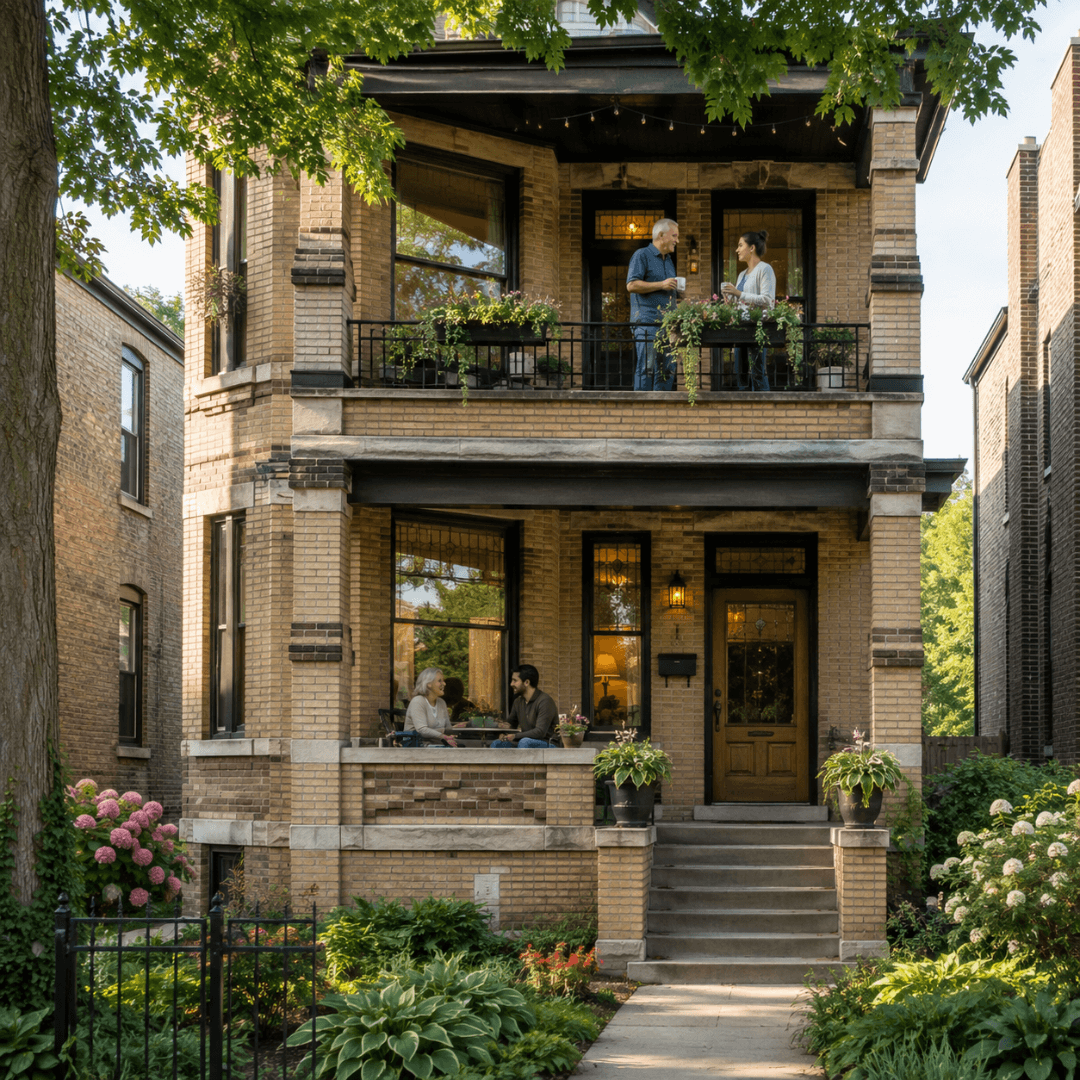 For some families, the dream is not one enormous kitchen.
It is two front doors.
A Chicago two-flat, three-flat or other multifamily property can let generations live very close while maintaining separate kitchens, bathrooms, entrances and living areas.
Depending on the building, there may also be another rentable unit that changes the family's effective monthly housing cost.
Explore Chicago & Near-West Suburban Multifamily HomesOption 3: Adapt a home the family already owns
Sometimes the right property is already in the family.
A large older home may already have the space but not the right configuration. That could mean reworking a first floor, creating a more private suite, improving accessibility, adding a second laundry area, or converting underused space.
The important question is whether the project really solves the reason everyone is considering a move and whether the total investment makes sense for the house and neighborhood.
Option 4: Create separate living space
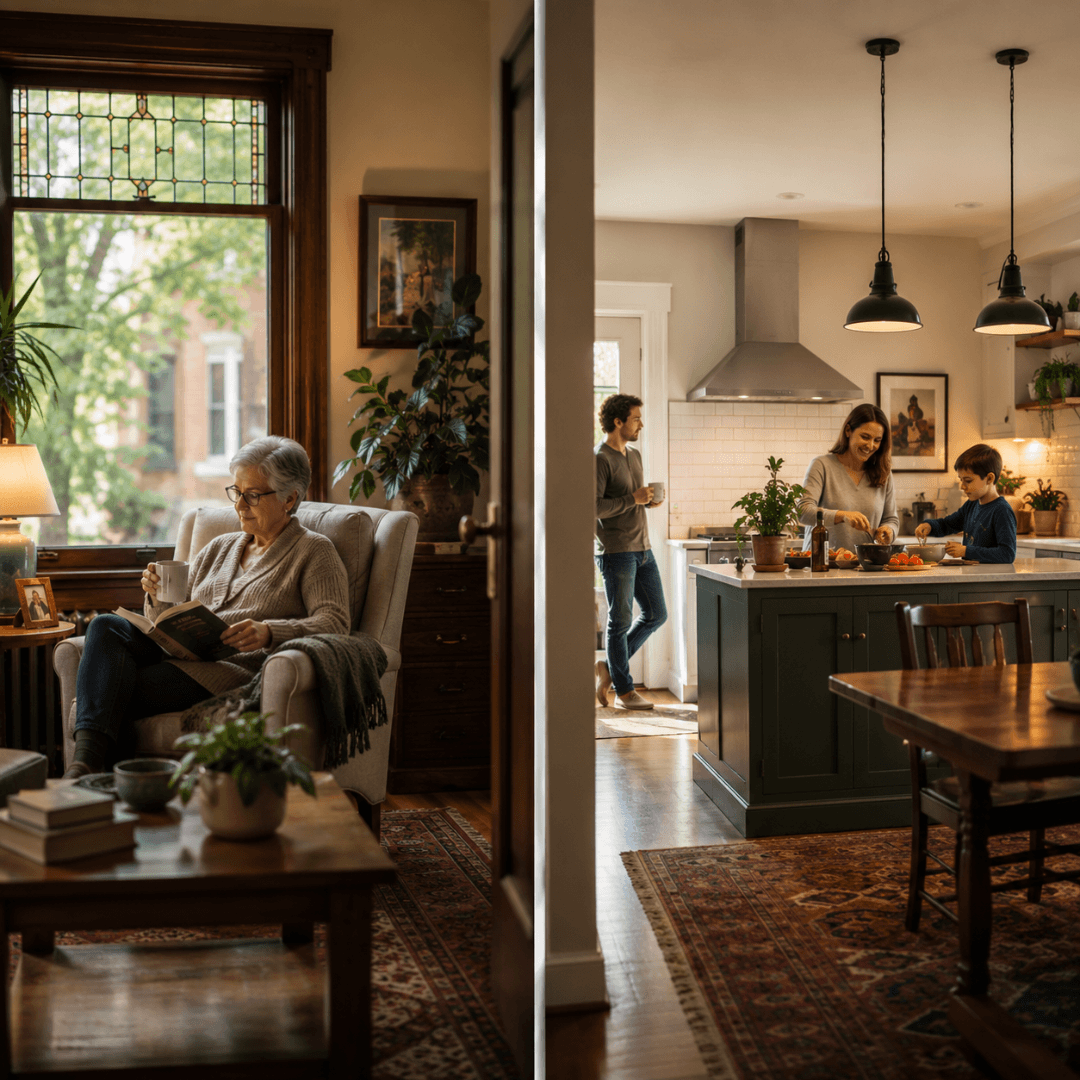 An accessory dwelling unit, coach-house arrangement, attached suite, interior conversion or another form of separate living space can sometimes create the sweet spot: close enough to help each other, separate enough to preserve independence.
But this is exactly where families should resist the urge to assume that because a project looks physically possible, it is automatically permitted.
Zoning, lot characteristics, building type, permitting, accessibility, utilities and local rules all matter. Treat the idea as something to investigate, not something to promise yourself before you have checked the property.
The equity piece can completely change the conversation
 This is one of the biggest things families overlook.
Suppose a parent bought a home decades ago and now owns most or all of it. That equity may represent housing flexibility.
Another family member may also own a home. Suddenly the question is not simply, "Can we afford an $800,000 house?"
It becomes: "If these properties were sold, what would everyone actually have available, what would we need to finance, and what would our combined monthly housing cost become?"
Sometimes the answer is surprisingly compelling. Sometimes everybody discovers that keeping the current houses is smarter. Both are useful outcomes.
There are costs a mortgage calculator cannot see
A spreadsheet can tell you whether the property is affordable.
It cannot tell you whether Dad watching television at maximum volume twelve feet from your bedroom will eventually send you over the edge.
Privacy has value. So does independence.
Before buying anything together, think seriously about:
- Separate entrances
- Separate kitchens and laundry
- Private bathrooms
- Outdoor space
- Sound separation
- Parking
- Work-from-home space
- Accessibility
- Whether one portion could be rented later
Then comes the family meeting nobody wants to have
Before anyone contributes a six-figure down payment or signs a mortgage, families need to talk about ownership, money, responsibility and exit plans.
- Who is contributing what upfront?
- Who will actually own the property?
- Who will be on the mortgage?
- How will monthly expenses be divided?
- Who pays for major repairs?
- What happens if someone's income changes?
- What happens if someone wants to move?
- What happens after a death, divorce or remarriage?
- Does caregiving count as a contribution?
- Can one person's interest be bought out?
If answering these questions makes Thanksgiving uncomfortable, imagine answering them after you have bought the house.
Try the hypothetical version first
Run your family through the Multigenerational Home Planner
Compare buying one larger home, buying a multifamily property, adapting an existing home, creating separate living space, or keeping one property as a rental.
You can plug in your own housing costs, equity, contributions and privacy needs. No email required to use it.
Try the Free Multigenerational Home PlannerIf the math works, then we investigate the real estate
That is where the hypothetical version becomes useful.
We can figure out what existing homes might realistically sell for, what could actually be available after a sale, and which property types and layouts deserve a closer look.
That might mean a Chicago two-flat, a Forest Park multifamily property, a large Oak Park home with unusually flexible living space, or something in Berwyn or Elmwood Park that gives everyone more separation for the money.
And sometimes, after doing all of this homework, the answer is: everybody should continue loving each other from separate addresses. That is an entirely successful outcome.
Thinking about making a housing change?
Whether you are considering multigenerational living, downsizing, selling a longtime family home or simply trying to figure out whether moving makes financial sense, start with the resources built around the decision itself.
Explore My Chicagoland Selling ResourcesMultigenerational Living FAQs
A multigenerational home is any housing arrangement where more than one adult generation lives in the same property or on the same residential site. That might mean parents and adult children in one single-family home, separate units in a two-flat, or independent living space within or alongside an existing home.
It can be. Two-flats and other multifamily properties can give family members much more independence because units may have separate kitchens, bathrooms, entrances and living spaces. The right answer depends on the building, financing, ownership plan and how much separation the family actually wants.
Potentially. Families can sometimes combine resources for a purchase, but who contributes the down payment, who qualifies for financing, who is on title and how ownership is divided are separate questions. Families should involve appropriate lending, legal, tax and estate-planning professionals before committing money.
Not necessarily. One family may benefit from selling first and using equity toward the next purchase, while another may prefer to keep a property as a rental or preserve a favorable mortgage. The best structure depends on equity, financing, rental potential, timing and the family's risk tolerance.
Sometimes, but the answer depends on the municipality, zoning, lot, building type and project. A property that appears to have enough physical space is not automatically eligible for an accessory dwelling unit or other separate living arrangement. Local rules and permitting should be investigated before relying on that option.
Think beyond bedroom count. Important features may include separate entrances, kitchens or kitchenettes, laundry, first-floor bedrooms, accessible bathrooms, parking, sound separation, private outdoor space, work-from-home areas and enough separation for each household to maintain independence.
A simple monthly split is only one part of the conversation. Families should also decide how down payments, maintenance, taxes, improvements and major repairs will be handled, and how those contributions relate to ownership. Those decisions should be documented with professional legal and financial guidance.
That question should be addressed before the purchase. Families should discuss buyout rights, sale provisions, death, divorce, changing care needs and other possible future events with an attorney so the ownership structure has an exit plan before anyone needs one.