


Pre-Listing Curb Appeal Strategy
Before You List Your Home, Look at the Front Yard
Why strategic landscaping can improve curb appeal, attract buyers, and help your entire property make a stronger first impression.
If you’re thinking about selling your home in Oak Park, River Forest, Chicago, or the near-west suburbs, you’ve probably heard the usual pre-listing advice.
Declutter. Paint. Clean the windows. Replace dated light fixtures. Stage the living room.
All good advice.
But there’s one part of the property sellers routinely underestimate:
The front yard.
Buyers don’t experience your home for the first time when they walk through the front door.
They experience it when they pull up to the curb. And sometimes, long before that.
They see the exterior photos online. They study the front elevation. They notice whether the property feels welcoming, well maintained, interesting, forgettable, overgrown, or completely devoid of personality.
That first impression matters.
According to the National Association of REALTORS®, 97% of REALTORS® believe curb appeal is important in attracting a buyer, and 92% have recommended that sellers improve their curb appeal before listing.
Source: National Association of REALTORS® Remodeling Impact Report
But improving curb appeal doesn’t necessarily mean installing a row of boxwoods, spreading red mulch, and calling it a day.
Sometimes the best investment is creating a landscape that makes the entire property feel more established, intentional, and memorable.
A Small Chicago Front Yard Can Make a Big Impression
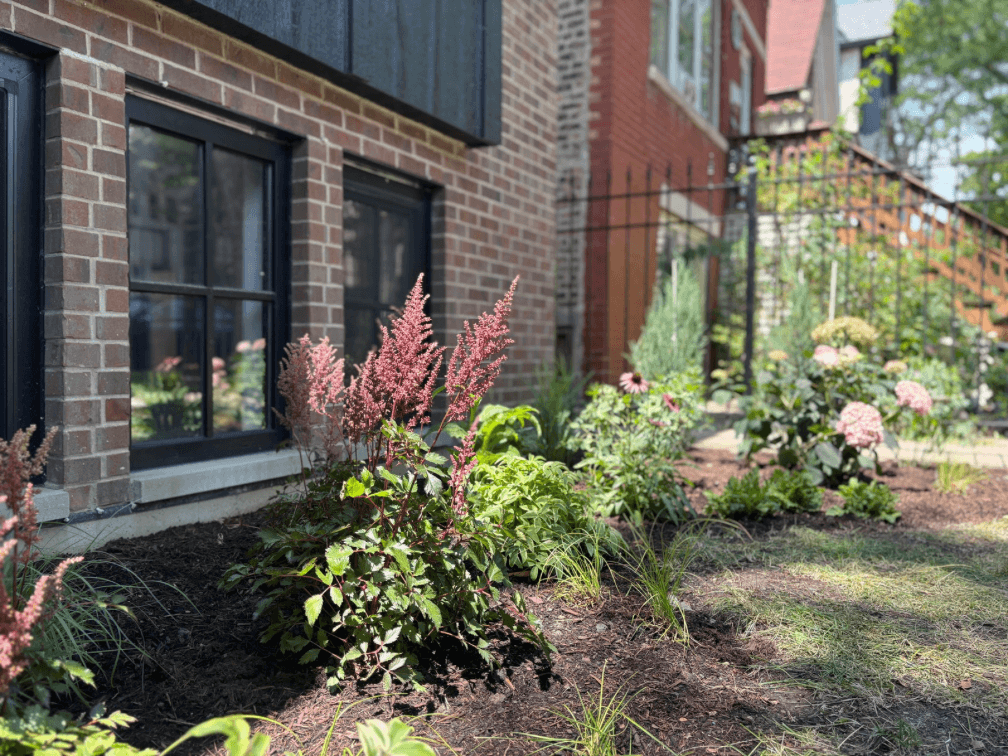
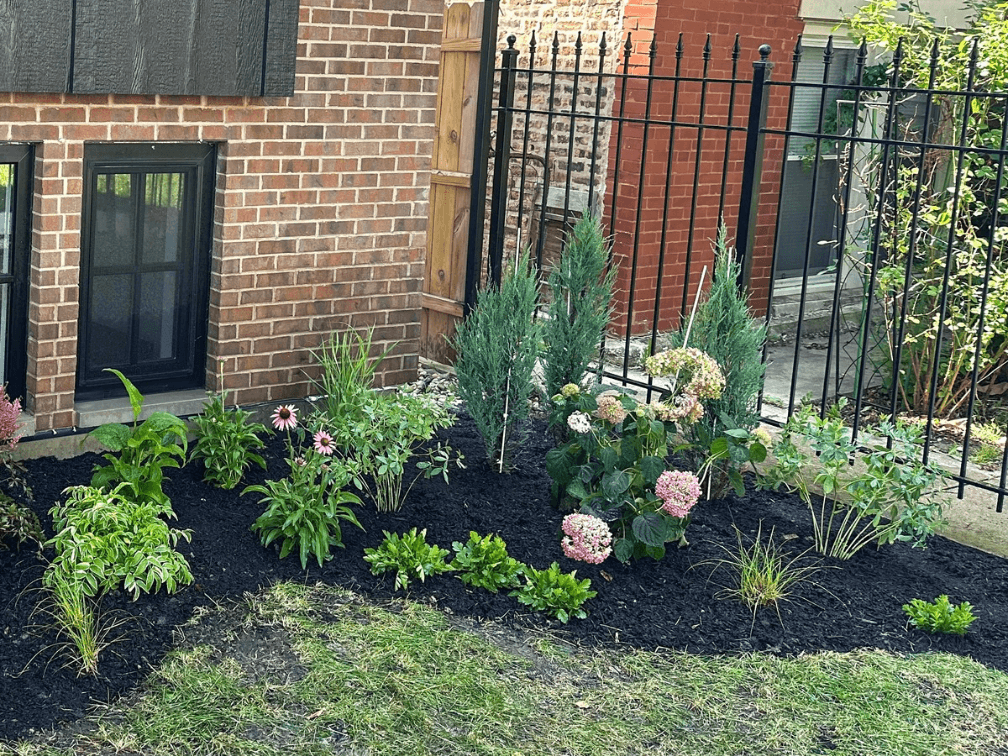
Recently, I had the opportunity to help make exactly that happen at a home in Logan Square.
The property had a relatively small, fenced front yard. Like thousands of city lots throughout Chicago, there wasn’t room for an enormous landscape installation.
But there was plenty of room to do something meaningful.
The homeowners worked with Spoke Pockette Gardens to begin transforming the space into a layered landscape filled with flowering perennials, ornamental grasses, shrubs, hydrangeas, evergreens, and plants selected to create seasonal interest while supporting pollinators and other neighborhood wildlife.
The goal wasn’t simply to make the yard prettier.
It was to make the property greener, more beautiful, more alive, and more connected to the neighborhood around it.
That’s an important distinction.
Good landscaping isn’t decoration placed around a house. It changes how the entire property feels.
Landscaping Can Be a Pre-Listing Investment
One of the questions I regularly help sellers answer is:
Where should I spend money before putting my house on the market?
The answer is different for every property.
Sometimes painting provides the best return. Sometimes it’s refinishing hardwood floors. Sometimes the smartest decision is doing almost nothing and pricing the property accordingly.
And sometimes, the biggest missed opportunity is outside.
The National Association of REALTORS® reports that 92% of REALTORS® have recommended improving curb appeal before a home is listed, while 97% believe curb appeal is important in attracting buyers.
Homeowners recognize its potential, too. In a 2023 Thumbtack and Nextdoor survey cited by NAR, more than half of homeowners said they believed an attractive landscape and exterior could increase a home’s resale value by at least $20,000. Sixteen percent believed the increase could exceed $50,000.
Source: National Association of REALTORS®, “5 Ways to Freshen Up That Home’s Curb Appeal”
That doesn’t mean spending $20,000 on landscaping automatically adds $20,000 to the sale price. Real estate doesn’t work that way.
The result depends on the home, neighborhood, existing landscape, quality of the design, local price point, buyer expectations, and current market conditions.
But it does mean the front yard deserves to be part of the pre-listing conversation.
The Biggest Mistake Sellers Make With Curb Appeal
They wait until two weeks before the photographer arrives.
Landscapes need time.
Plants grow. Beds settle. Perennials fill in. Shrubs develop structure. The individual pieces begin to read as one connected garden.
A landscape installed a year or two before selling can become an established feature of the property instead of looking like someone hurried through the garden center the weekend before the listing photos.
That’s why some of the best pre-listing improvements happen well before a homeowner is ready to put a sign in the yard.
If you think you may sell within the next one to three years, this can be an ideal time to evaluate the exterior of your home.
You get to enjoy the improvements now. The plants have time to mature. And when you eventually sell, the landscape may help create a stronger first impression of the entire property.
Not Every Landscaping Project Is a Good Pre-Listing Investment
This is where real estate strategy matters.
More landscaping is not automatically better.
An expensive installation that is overly personalized, difficult to maintain, poorly designed, or completely out of scale with the property may not produce a meaningful return.
The goal should be to improve the property, not simply spend money on it.
For sellers, I generally look for opportunities to:
- Improve the view of the home from the street and in listing photos
- Create a clearer and more welcoming approach to the entrance
- Remove or replace struggling, overgrown, or poorly placed plants
- Add texture and seasonal interest without making the yard feel difficult to maintain
- Choose plants that complement the architecture and scale of the property
- Improve neglected parkways and other highly visible areas when practical
- Preserve mature trees and valuable existing landscape features
- Avoid expensive improvements that the neighborhood’s likely buyers may not value
The right recommendation could be a complete landscape redesign.
It could also be pruning, editing existing beds, adding a few strategically placed plants, redefining bed lines, improving the parkway, and applying fresh mulch.
The investment should match the property.
Why Local Context Matters
Our Chicago-area housing stock is incredibly diverse.
A Logan Square city lot is different from an Oak Park bungalow. An Elmwood Park Cape Cod is different from a River Forest estate. A Berwyn two-flat is different from a Forest Park townhouse.
The landscape should respond to the architecture, lot size, neighborhood, amount of sunlight, drainage conditions, maintenance expectations, and the way homeowners actually use the space.
That’s one reason I’ve become increasingly interested in the intersection between real estate and landscape design.
I spend a lot of time thinking about what makes someone fall in love with a property.
It isn’t always square footage. It isn’t always the newest kitchen.
Often, it’s the feeling that someone cared for the place.
A beautiful, thoughtful landscape can communicate that before a buyer ever opens the front door.
A Better Way to Prepare Your Home for the Market
My approach to preparing a home for sale is simple:
Don’t start with a generic checklist. Start with the property.
Before recommending improvements, I look at the home, the neighborhood, likely buyers, competing listings, current market conditions, and the potential return on the money being spent.
Then we decide what is worth doing.
For homeowners who need more substantial exterior improvements, I can also collaborate with Spoke Pockette Gardens on thoughtful landscape design and installation projects throughout Chicago and the near-west suburbs.
That creates an unusual combination of perspectives.
How can we create a more beautiful, ecologically useful landscape that works for this home and the people who live here?
How will this investment affect the way buyers experience the property, and does it make financial sense in the local real estate market?
Those are questions homeowners should be asking together.
Thinking About Selling in the Next Few Years?
You don’t need to wait until you’re ready to list your home to start preparing for the next chapter.
In fact, I’d rather talk to homeowners earlier.
Sometimes the best advice is to make improvements now and enjoy them. Sometimes it’s to save your money. And sometimes a relatively modest change can dramatically improve the way a property looks, photographs, and feels.
If you’re considering selling a home in Oak Park, River Forest, Forest Park, Elmwood Park, Berwyn, Chicago, or the surrounding near-west suburbs, I’m happy to walk the property with you and help identify which improvements are likely to matter and which ones probably aren’t worth the expense.
And if your yard needs more than a quick cleanup, Spoke Pockette Gardens offers landscape design and installation focused on creating beautiful, layered, ecologically useful outdoor spaces.
Whether you’re staying for another ten years or preparing to sell next spring, the land around your home is part of your home.
It should work harder for you.
What’s Your Next Step?
Whether you’re preparing to sell or ready to transform the landscape you plan to enjoy, let’s start with a thoughtful look at the property.
Let’s grow something wildly beautiful.
Project costs, potential resale benefits, and buyer responses vary by property, location, market conditions, scope, timing, and quality of work. No specific increase in property value or sale price is guaranteed.