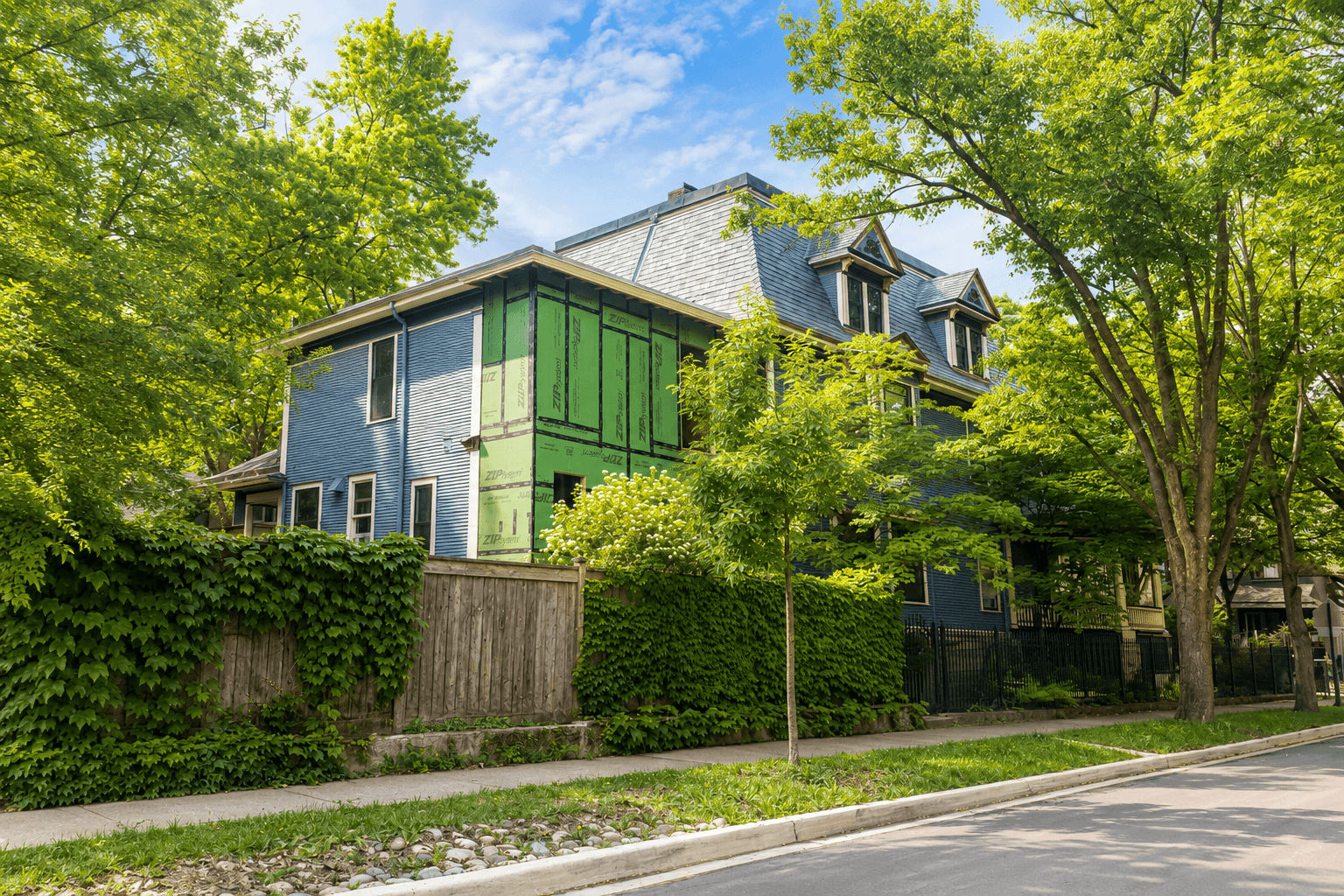
Thinking About a Home Addition? Read This Before You Build in Oak Park, River Forest, or the Chicago Area
Before you spend six figures adding square footage, it is worth asking one big question: is your house really the problem?
Every spring and summer, I start seeing the same question pop up from homeowners in Oak Park, River Forest, Elmwood Park, Berwyn, Chicago, and the surrounding suburbs:
“Should we add onto our house, or should we move?”
It is a bigger question than most people realize.
As a Realtor working throughout Oak Park, River Forest, Elmwood Park, Berwyn, Chicago, and the surrounding near west suburbs, I have seen homeowners spend six figures on additions that transformed the way they lived. I have also seen homeowners wish they had sold instead.
If you are considering a home addition, here are the questions I would be asking before signing a contract.
Before spending on the house, understand the house
If you are weighing a major renovation against moving, it helps to know how buyers may already see your home's condition and what it could realistically sell for today. Try my Real-World Home Value Check.
1. Is your house actually the problem?
Sometimes a family truly needs another bedroom, a home office, a larger kitchen, or more functional living space.
Other times, the issue is the neighborhood, the commute, the lot size, the schools, the layout, the stairs, or simply that the home no longer fits your next chapter.
Before investing heavily in construction, it is worth understanding what your current home could sell for and what alternatives exist nearby. You may find that building is the right choice. You may also find that moving gives you more of what you want with less dust, stress, and surprise invoices.
If you are starting to wonder whether your current home still fits, my Sell Without Getting Stuck guide is a good next read.
2. What will the project really cost?
The contractor’s proposal is only part of the equation.
Ask about:
- Architectural and engineering fees
- Permits and inspections
- Utility upgrades
- Temporary living arrangements if needed
- Landscaping restoration
- Change orders
- Unexpected structural issues
- Material price increases
- Financing costs
A contingency fund is not optional. It is part of the real budget. Once walls are opened, surprises are common.
3. Does the addition make sense for your neighborhood?
The most expensive addition is not always the smartest investment.
An oversized project may not return its cost if it significantly exceeds what buyers in the area are willing to pay. That does not automatically mean you should not do it. If the addition gives you ten more happy years in the home, resale value is not the only metric.
But if you think you may sell within the next few years, it is smart to look at comparable homes before building. A local market review can help you understand whether your plans align with buyer expectations in your neighborhood.
For more local context, explore homes and neighborhood information for Oak Park, River Forest, Forest Park, and Brookfield.
4. Ask contractors difficult questions.
Beyond price, I would want to know:
- Who will supervise the project daily?
- How many projects are running simultaneously?
- What permits are required?
- How are delays handled?
- Who is responsible for inspections?
- What warranty is included?
- Can they provide references from projects completed several years ago?
A low bid is not always a bargain. A vague proposal is not a plan. And “we’ll figure that out later” is not my favorite sentence when your house and your money are involved.
5. Expect life to be disrupted.
Even excellent contractors create noise, dust, schedule changes, and inconvenience. If you are living through the renovation, prepare accordingly.
Think through parking, pets, kids, remote work, bathroom access, kitchen access, storage, and whether there will be phases where parts of the house are unusable.
6. Think about resale now.
Features that improve daily life often improve resale value too, but highly customized spaces may have a smaller buyer pool.
The goal is to create something you will love while keeping future flexibility in mind. A thoughtful primary suite, better kitchen flow, a mudroom, a first-floor bedroom, or a usable family room may be easier for future buyers to understand than a hyper-specific space designed around one family’s exact routine.
If resale is part of your decision, you may also like my home selling resources and my guide to downsizing in Oak Park, River Forest, and the near west suburbs.
7. Do not overlook the “move instead” option.
Sometimes homeowners assume moving is impossible because of interest rates, low inventory, the emotional attachment to their current house, or the sheer exhaustion of thinking about packing.
Very fair. Moving is a lot.
But after comparing renovation costs, timelines, financing, disruption, and the local market, many homeowners discover they can find a home that already has what they want.
Other times, staying put and building is absolutely the right call.
The important thing is making an informed decision before committing hundreds of thousands of dollars.
If you are curious what is available nearby, start with buying resources, Chicago condos for sale, or neighborhood pages like La Grange and Elmwood Park.
My biggest piece of advice
Before choosing between building and moving, understand both options.
A conversation with a trusted Realtor is not about convincing you to sell. It is about helping you evaluate your home’s current value, understand what else is available, and determine whether investing in your existing property truly makes financial and lifestyle sense.
Sometimes the best renovation is the one you never have to do. And sometimes the perfect next chapter starts with adding the extra space your family needs.
Either way, informed decisions almost always lead to better outcomes.
If you are weighing whether to renovate, add on, sell, or buy something that fits your life better, I am happy to help you look at the numbers, the local market, and the bigger picture.
Related reading
FAQ: Home Addition or Move?
Is it better to add onto a house or move?
It depends on the home, location, project cost, available alternatives, and how long you plan to stay. If the addition solves a long-term lifestyle need and the neighborhood still fits, building may make sense. If the project is expensive and still leaves major compromises, moving may be smarter.
Should I talk to a Realtor before building an addition?
Yes. A Realtor can help you understand your current home value, nearby comparable sales, buyer expectations, and whether the proposed project is likely to make sense from a resale perspective.
What should I ask a contractor before hiring them?
Ask who supervises the project, what permits are required, how delays and change orders are handled, what warranty is included, and whether they can provide references from completed projects that are several years old.
Do home additions always increase resale value?
Not always. A well-planned addition can increase appeal and value, but the return depends on the neighborhood, layout, quality of work, buyer demand, and whether the final home still fits local market expectations.